Launch offer — valid today only

📄 Digital book in PDF · read it on your phone or print it

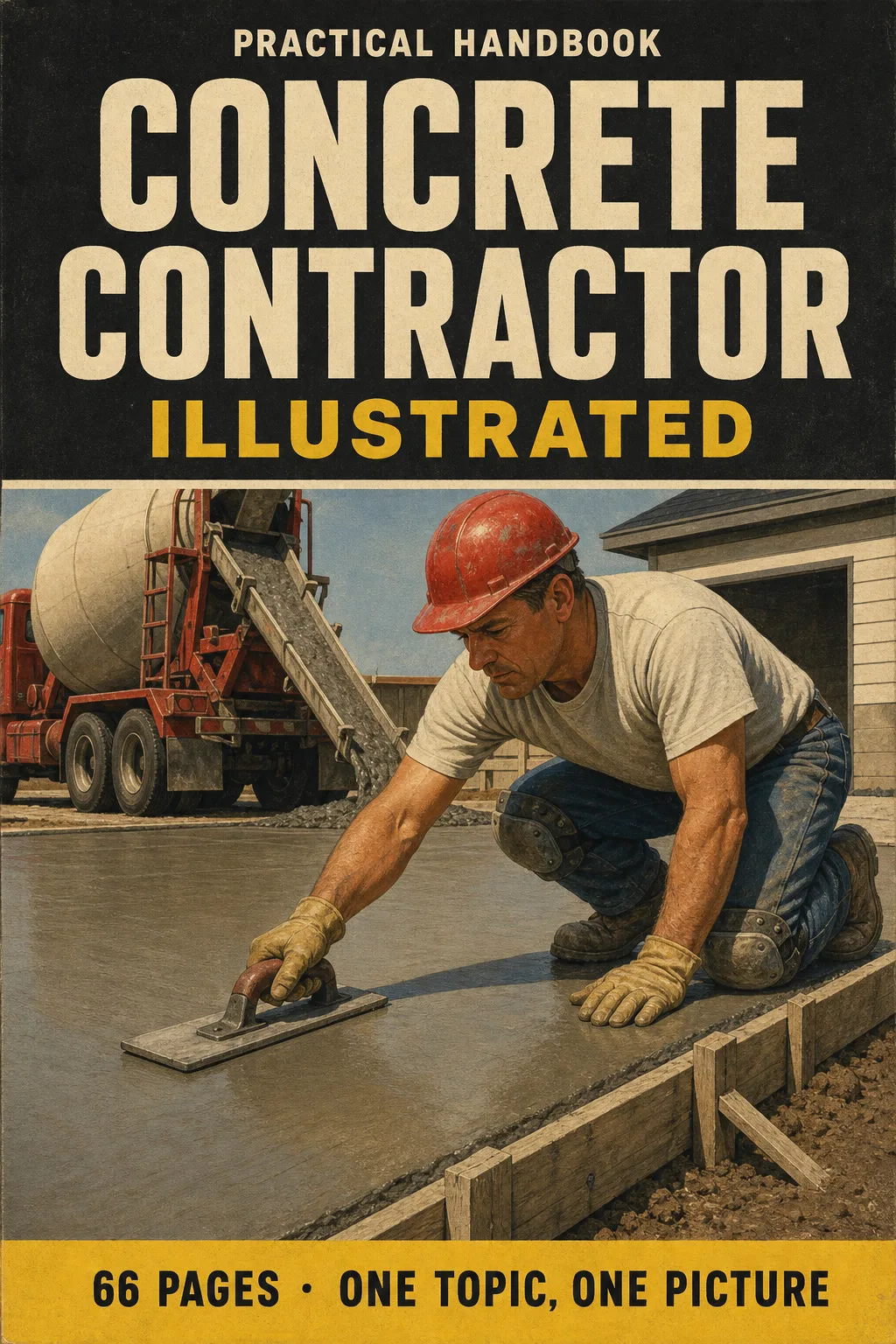
The Concrete Contractor Exam in Drawings: See It on the Slab, Answer It in Numbers One Topic on Every Page

Mix design, subgrade, formwork, rebar, placing, finishing, joints, curing and cubic yards. Every topic gets its own page: the drawing first, then what you need to remember. 66 illustrated pages.

START STUDYING THIS WAY

🔒 Secure checkout · PDF by email · 30-day guarantee

Every topic, its own pageEach technique drawn, with the explanation right beside it
66 illustrated pages9 parts, from how concrete works to the final exam review
Up-to-date sourcesACI 318, ASTM C94 and the IRC
PDF by emailFormat

Look Inside the Book

Every page has one big drawing and a box with the numbers you need to know:

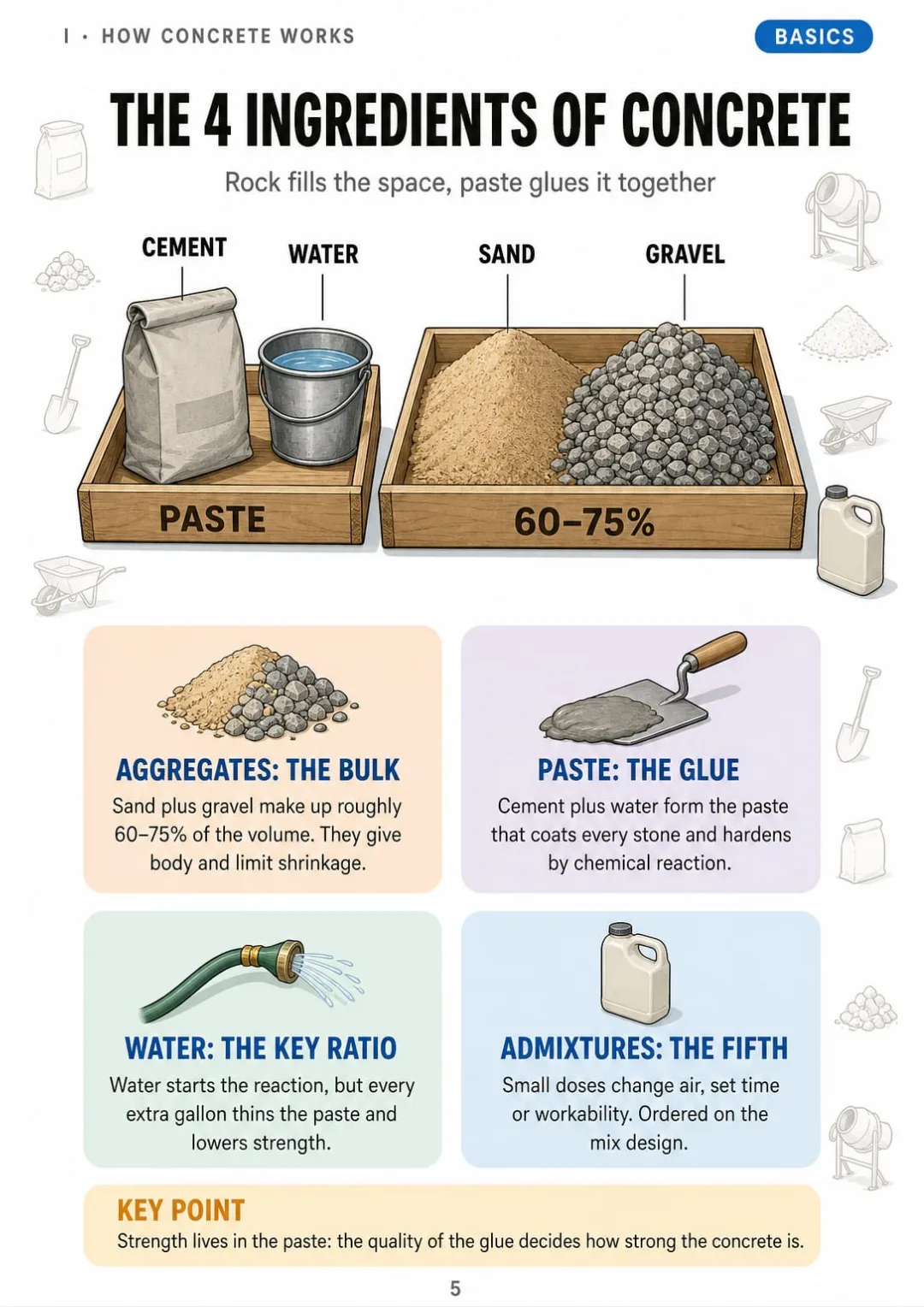
Aggregates are roughly 60–75% of the volume; cement and water are the glue.
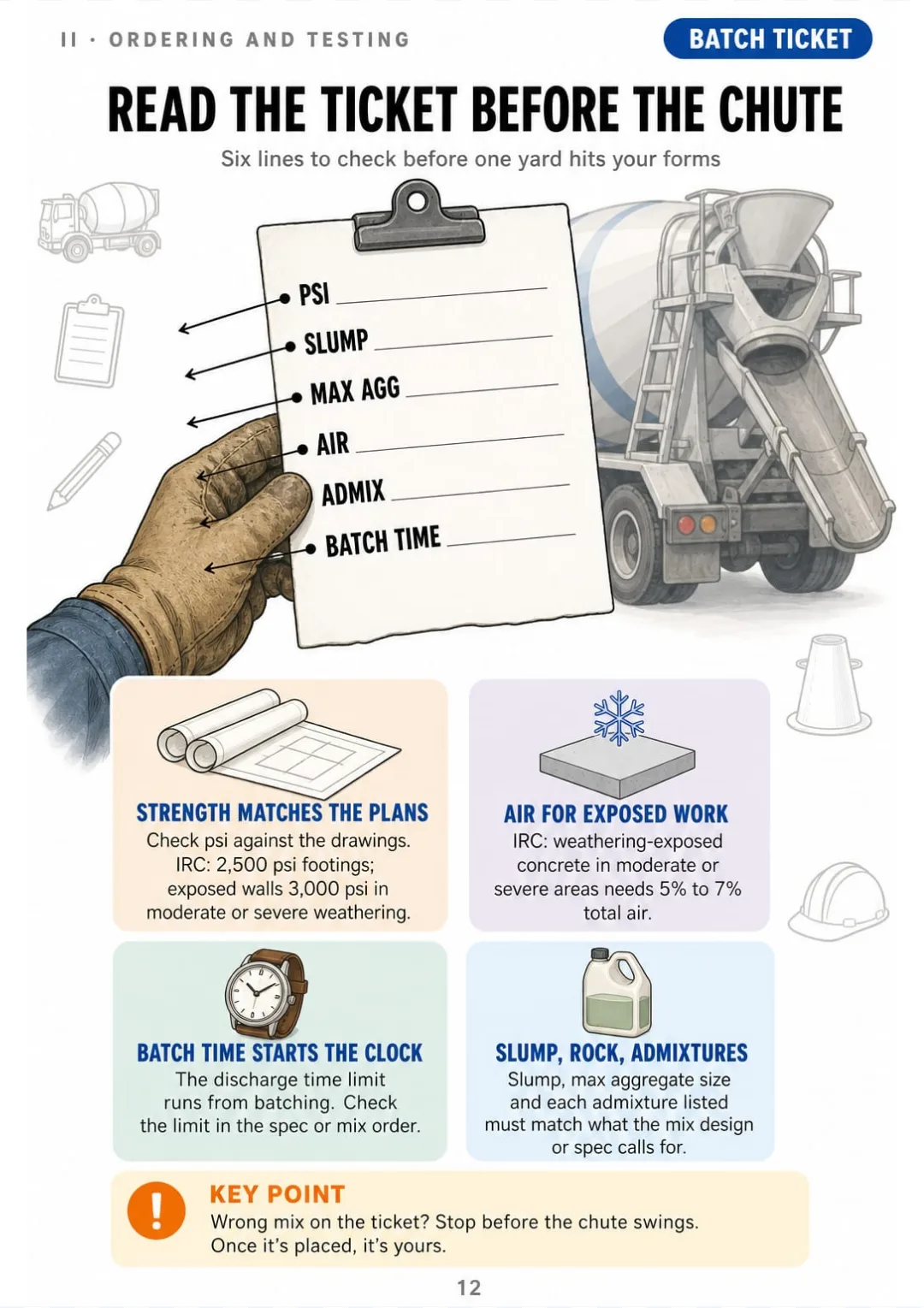
Delivery ticket, line by line: psi, slump, max aggregate, air, admixtures, batch time.
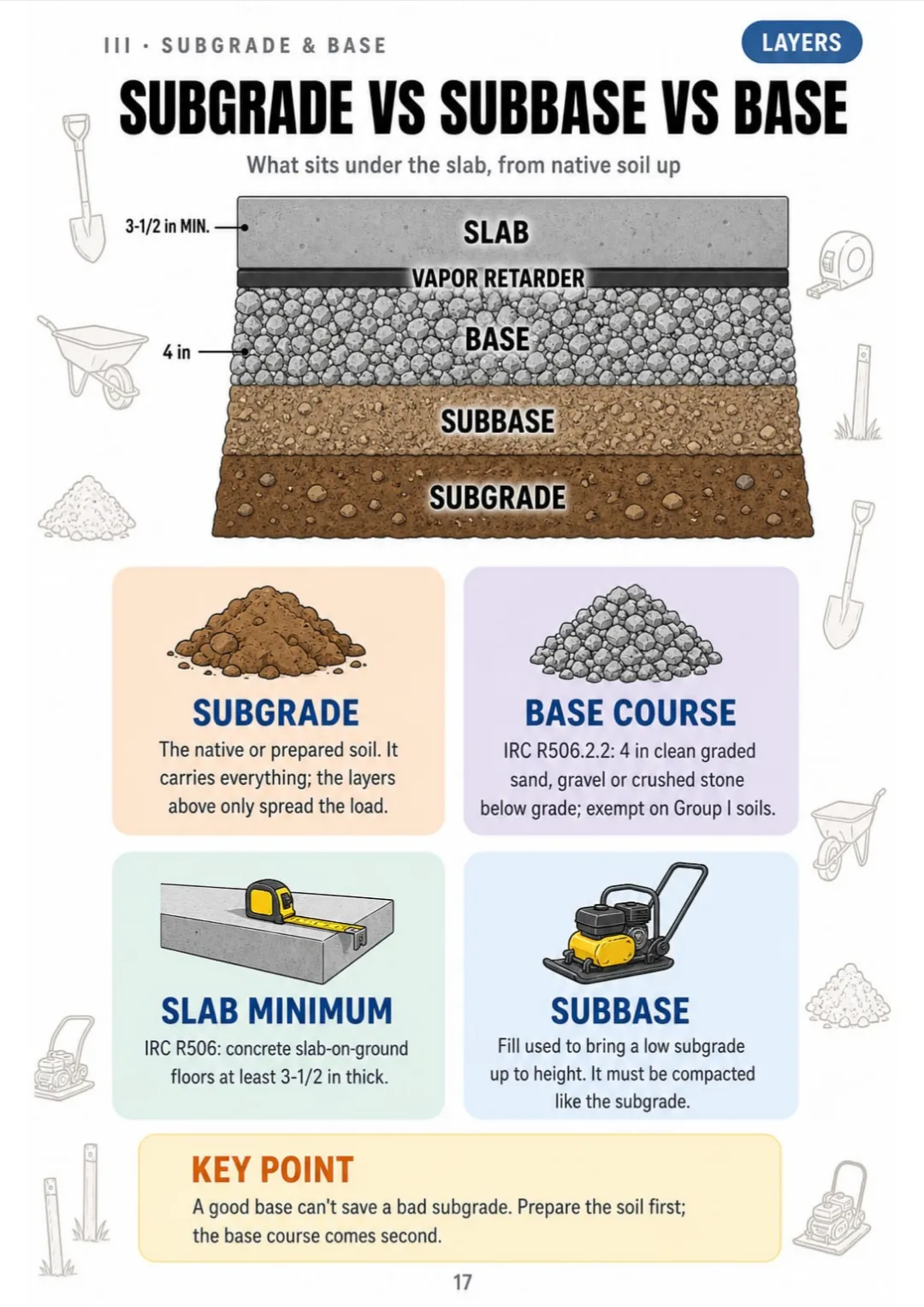
Subgrade, subbase, base: IRC R506 asks 4 in of base below grade, 3-1/2 in slab minimum
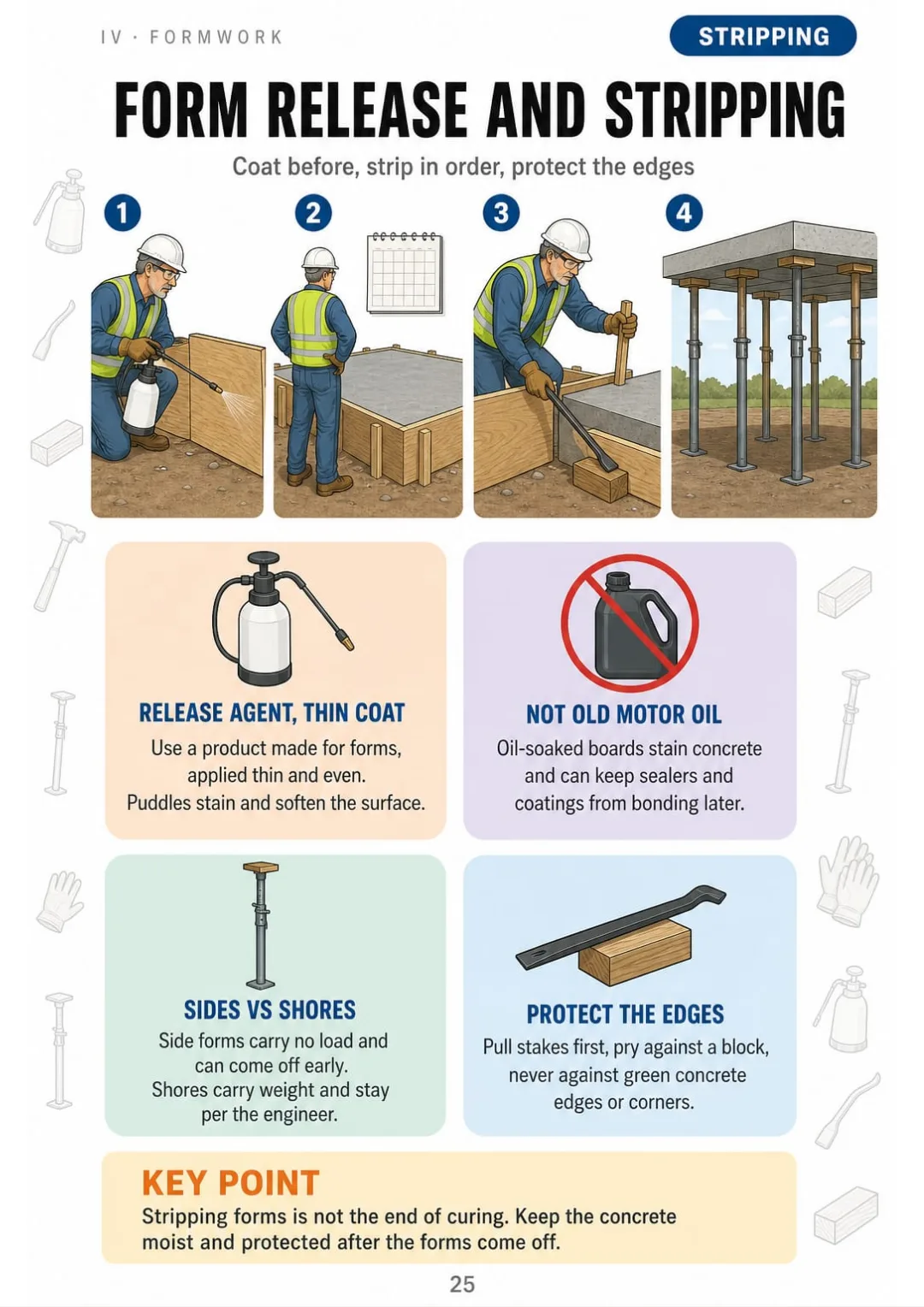
Side forms come off early; shores stay until the engineer or spec allows
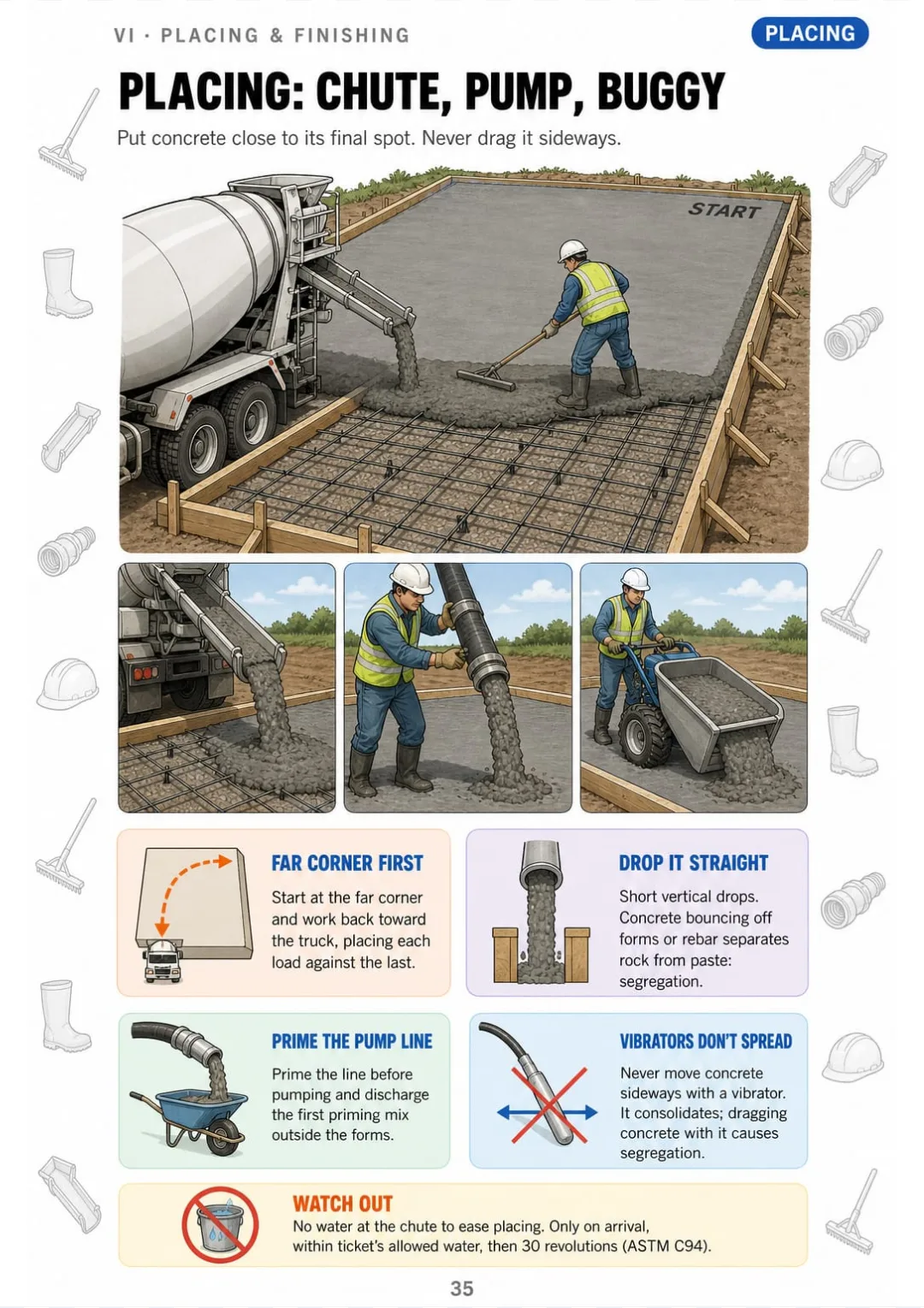
Far corner toward the truck, short vertical drops, prime the line, and no extra water at the chute (ASTM C94).
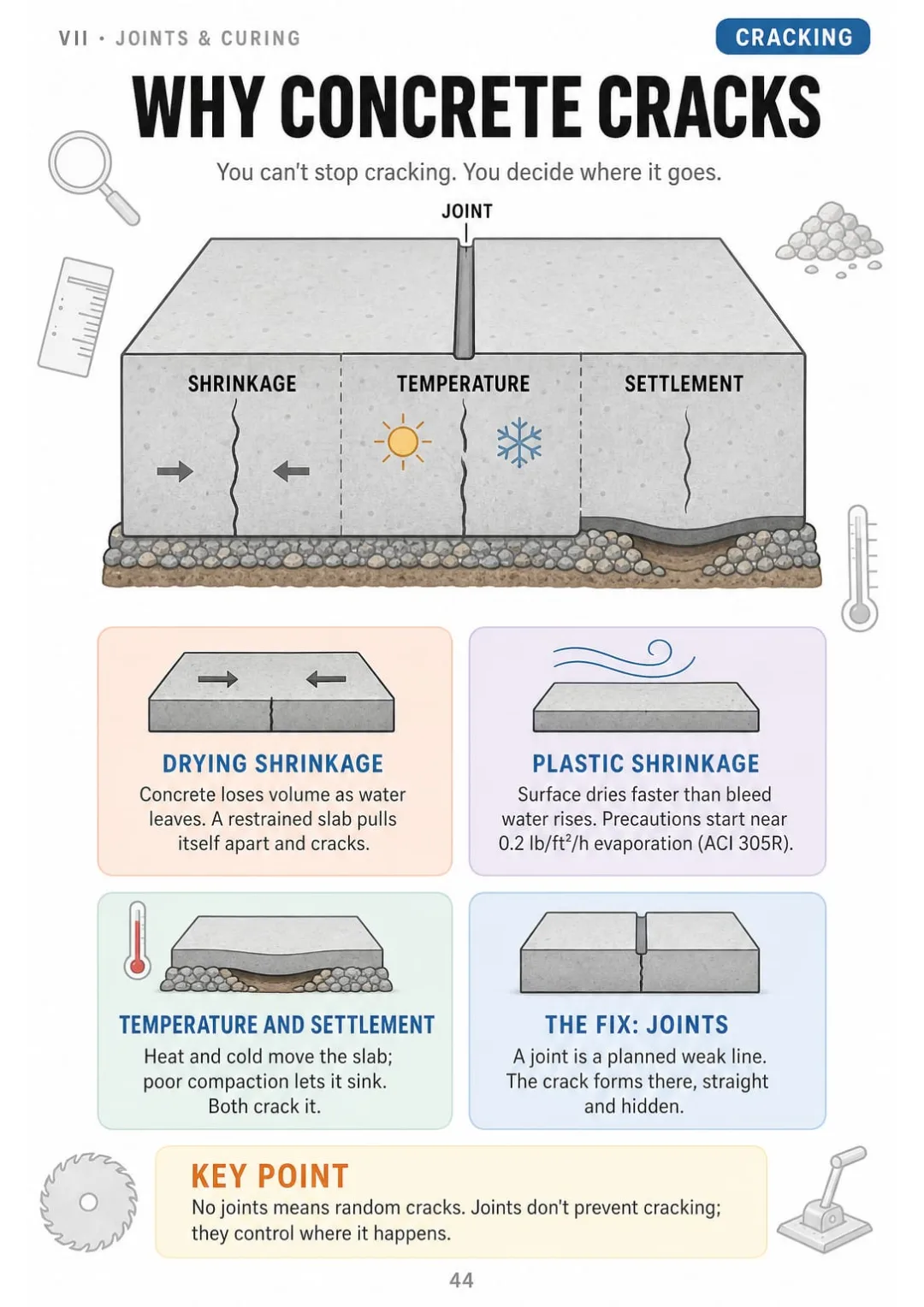
Shrinkage, temperature and settlement: three causes, one answer, the joint.
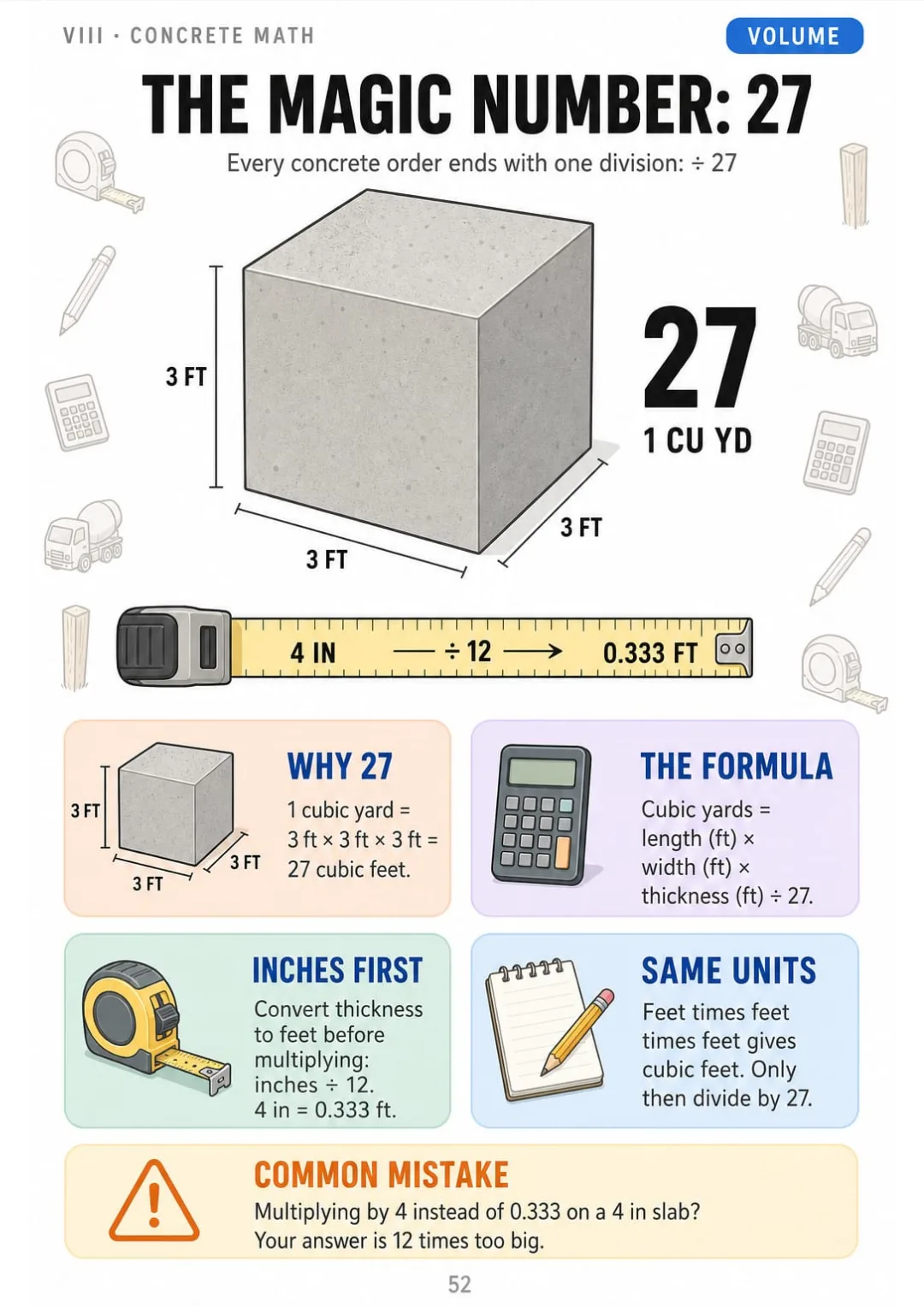
1 cu yd = 27 cu ft · convert inches ÷ 12 before multiplying

Swipe to see more →

These are real pages from the book. The table of contents is the full one: 9 parts and 62 topics.

The Problem Isn't You. It's How They Explained It.

You're on a practice question about the layers under a slab, and subgrade, subbase and base start to blur together. You've graded and compacted that ground a thousand times.

The manual covers it in long paragraphs: definitions, materials, depths, a code section number. You know the dirt. You just don't know the words the exam uses for it.

Subgrade, subbase, base: IRC R506 asks 4 in of base below grade, 3-1/2 in slab minimum

In the book, that same slab is cut open in a drawing: native soil at the bottom, then subbase, then base, with 4 in of base and the 3-1/2 in slab minimum from IRC R506 marked right on the layers.

Same with the delivery ticket, the 3-4-5 check, rebar sizes, why concrete cracks and the magic number 27: each one has its own page.

You see it, it makes sense, and you answer the question without going back to the manual.

COMPARE FOR YOURSELF

The Same Topic, Two Ways to Study It

THIS
  • The manual: line after line
  • Ticket checks explained only in words
  • You walk into the exam with doubts
Upon arrival of the ready-mixed concrete at the project site, the purchaser or the purchaser's representative should review the delivery ticket prior to discharge, verifying that the information furnished by the producer corresponds to the specified mixture. Pertinent data typically include the specified compressive strength, the designated slump, the nominal maximum size of coarse aggregate, the air content where applicable, the type and quantity of admixtures incorporated, and the time of batching, which governs the permissible interval for discharge under the applicable specification.
FOR THIS
  • The delivery ticket in one drawing
  • The values to check in one box
  • You see it and it clicks
Delivery ticket, line by line: psi, slump, max aggregate, air, admixtures, batch time.
CONTENTS

Take a Look at the 9 Parts and 62 Topics

How concrete works, ordering and testing, subgrade and base, formwork, reinforcement, placing and finishing, joints, curing and weather, concrete math, and defects, safety and exam review: 66 pages, all illustrated.

IHow Concrete Works · pp. 5-11
  1. The 4 Ingredients and What Each One Does
  2. Water-Cement Ratio: The Number That Sets Strength
  3. Hydration: Concrete Cures, It Doesn't Dry
  4. Compressive Strength in psi
  5. Portland Cement Types I to V
  6. Admixtures at a Glance
  7. Air Entrainment and Freeze-Thaw
IIOrdering and Testing · pp. 12-16
  1. Reading a Mix Design and Batch Ticket
  2. Ready-Mix Rules: Discharge Time and Drum Revolutions
  3. The Slump Test Step by Step
  4. Air Content and Temperature Tests
  5. Making Test Cylinders
IIISubgrade and Base · pp. 17-22
  1. Subgrade vs Subbase vs Base
  2. Soil Types and Bearing
  3. Compaction and the Proctor Test
  4. Vapor Retarders Under Slabs
  5. Grade, Slope and Drainage
  6. Frost Depth and Footing Bottoms
IVFormwork · pp. 23-27
  1. Slab Forms: Stakes, Boards and Kickers
  2. Footing and Wall Forms
  3. Form Release and Stripping
  4. Curved Forms and Radius Work
  5. Tolerances: How Flat Is Flat
VReinforcement · pp. 28-34
  1. Rebar Sizes: The Number Is Eighths
  2. Welded Wire Reinforcement
  3. Concrete Cover: The 3 Exposures
  4. Lap Splices and Bar Diameters
  5. Chairs, Dobies and Tie Wire
  6. Hooks, Bends and Dowels
  7. Post-Tensioned Slabs: Recognize and Respect
VIPlacing and Finishing · pp. 35-43
  1. Placing Methods: Chute, Pump, Buggy
  2. Consolidation and Vibrators
  3. Screeding to Grade
  4. The Finishing Order, Always the Same
  5. Bleed Water: Wait for It
  6. Bull Float and Darby
  7. Edging and Hand Jointing
  8. Power Troweling
  9. Broom, Swirl and Exposed Aggregate
VIIJoints, Curing and Weather · pp. 44-51
  1. Why Concrete Cracks
  2. Control Joint Spacing: 24 to 36 Times the Thickness
  3. Sawcutting: Depth and Timing
  4. Isolation and Construction Joints
  5. Curing Methods
  6. Hot Weather Concreting
  7. Cold Weather Concreting
  8. Sealers and Protection
VIIIConcrete Math · pp. 52-59
  1. The Magic Number: 27
  2. Cubic Yards for a Slab, Solved
  3. Footings and Grade Beams
  4. Columns, Piers and Round Work
  5. Stairs and Steps
  6. Waste Factor and Ordering
  7. Rebar and Mesh Takeoffs
  8. Area, Slope and Fractions on the Exam
IXDefects, Safety and Exam Review · pp. 60-66
  1. Surface Defects: Scaling, Dusting, Crazing
  2. Cracks, Curling and Blisters
  3. Honeycombing, Cold Joints and Pop-outs
  4. Jobsite Safety: Cement Burns and Silica
  5. Trenches, Pumps and Rebar Caps
  6. The 25 Numbers to Know by Heart
  7. How to Study the Last Two Weeks

One Page, One Topic, All Clear

Think of it this way:

You're taking the exam and a question gives you a 30 x 40 slab, 4 in thick, and asks how many cubic yards to order. On the job you'd call the plant. Here you have to work it out yourself.

In the book you open the page on the magic number 27 and see a cubic yard drawn as a block: 27 cubic feet, with the inches divided by 12 before you multiply.

Far corner toward the truck, short vertical drops, prime the line, and no extra water at the chute (ASTM C94).

The night before, you flip to sawcut depth, lap splices, concrete cover and the 90-minute rule: four pages, four answers you can find at a glance.

Concrete Contractor Illustrated is 66 pages in 9 parts, all drawn, with the 25 numbers to know by heart and a plan for your last two weeks at the end.

What you see drawn, you don't have to memorize.

What's Inside Concrete Contractor Illustrated:

Ipp. 5-11

How Concrete Works

The 4 ingredients, water-cement ratio, hydration, strength in psi, cement Types I to V, admixtures and air entrainment.

IIpp. 12-16

Ordering and Testing

Reading a mix design and a batch ticket, the 90-minute or 300-revolution rule, slump, air and temperature tests, and test cylinders.

IIIpp. 17-22

Subgrade and Base

Subgrade, subbase and base, soil types and bearing, compaction and the Proctor test, vapor retarders, slope and drainage, frost depth.

IVpp. 23-27

Formwork

Slab forms with stakes and kickers, footing and wall forms, form release and stripping, radius work and flatness tolerances.

Vpp. 28-34

Reinforcement

Rebar sizes in eighths, welded wire, concrete cover, lap splices, chairs and dobies, hooks and dowels, and how to recognize a post-tensioned slab.

VIpp. 35-43

Placing and Finishing

Chute, pump and buggy, vibrators, screeding, the finishing order step by step, bleed water, bull float, edging, power troweling and broom finish.

VIIpp. 44-51

Joints, Curing and Weather

Why concrete cracks, control joint spacing, sawcut depth and timing, isolation and construction joints, curing, hot and cold weather, sealers.

VIIIpp. 52-59

Concrete Math

The number 27, cubic yards for slabs, footings, piers, round work and stairs, waste factor, rebar and mesh takeoffs, and exam fractions.

IXpp. 60-66

Defects, Safety and Exam Review

Scaling, dusting, crazing, curling, honeycombing and pop-outs, cement burns and silica, trenches and pumps, the 25 numbers to know and the last two weeks.

At the end of the book: The 25 numbers to know by heart and a study plan for the last two weeks before the exam.
Plus: 2 Free Books

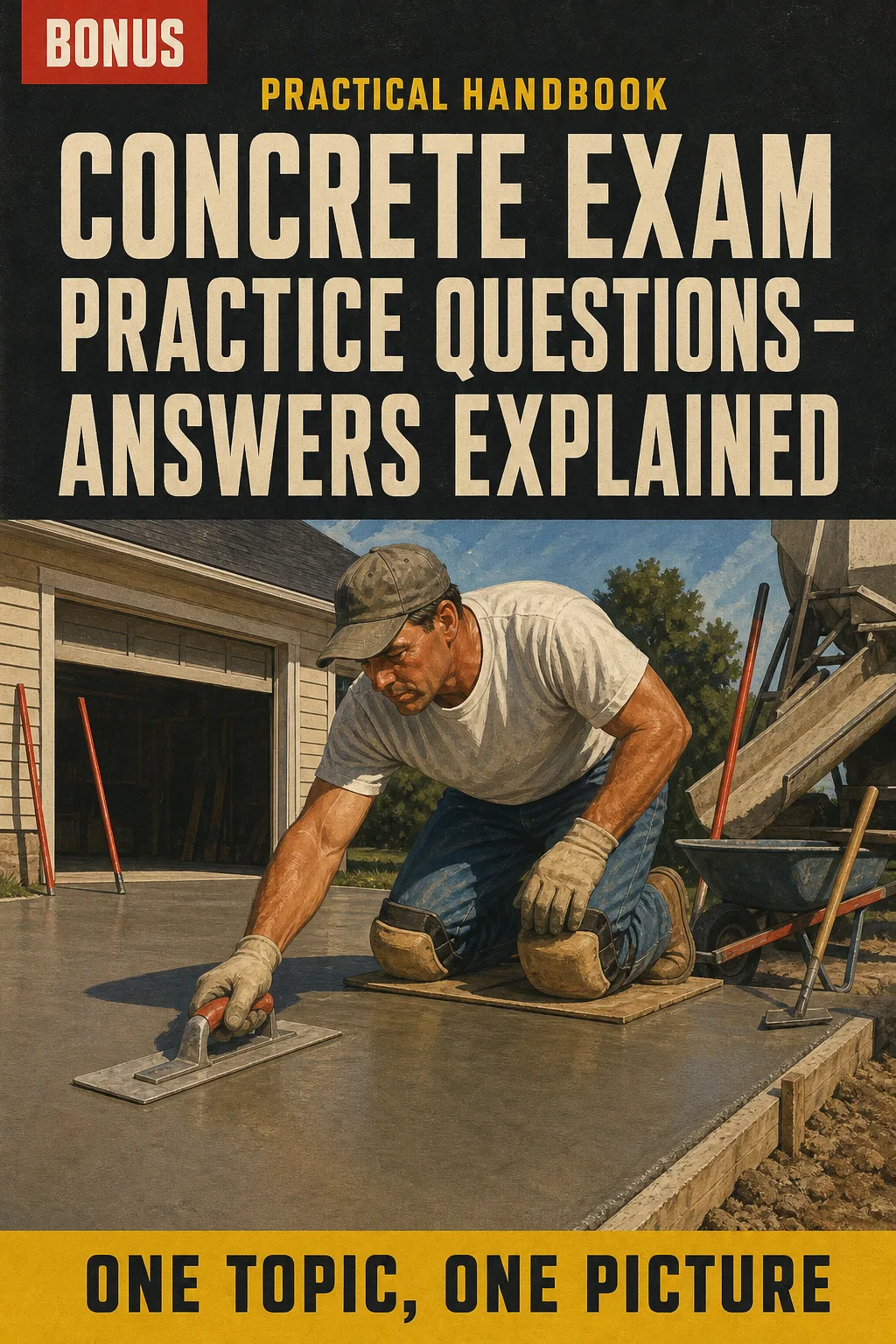
Concrete Exam Practice Questions — Answers Explained

BONUS 1: «Concrete Exam Practice Questions — Answers Explained»

Value on its own: US$ 17.90

Exam-style questions on every chapter, each answer explained with the page to go back to, so you know what's solid and what to review.

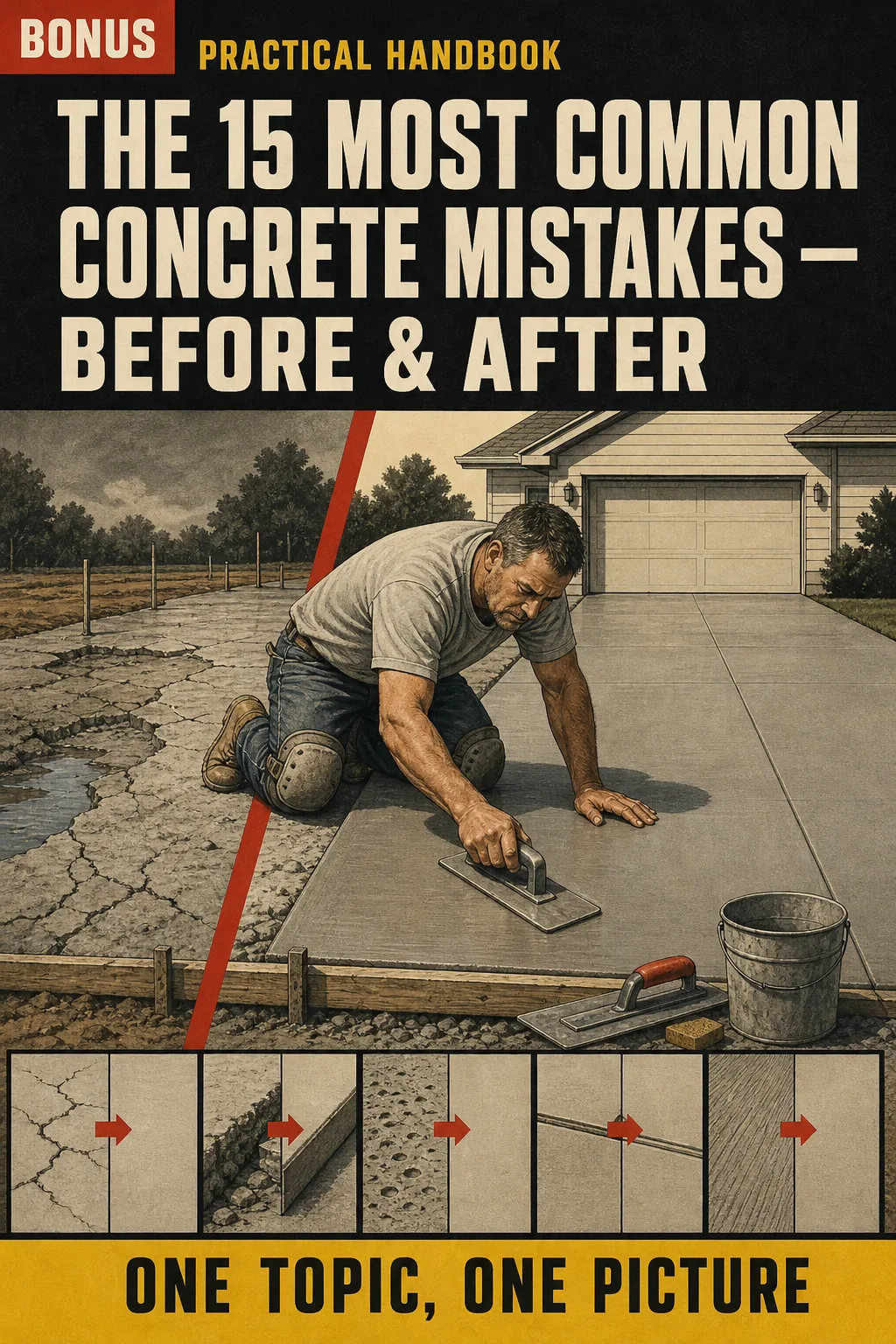
The 15 Most Common Concrete Mistakes — Before & After

BONUS 2: «The 15 Most Common Concrete Mistakes — Before & After»

Value on its own: US$ 14.90

The most frequent errors on the slab, drawn side by side with the right way, from troweling too early to joints cut too late.

Concrete Contractor Illustrated with 2 Free Books

  • Concrete Contractor Illustrated: 66 illustrated pagesUS$ 63
  • BONUS 1: Concrete Exam Practice Questions — Answers ExplainedUS$ 17.90
  • BONUS 2: The 15 Most Common Concrete Mistakes — Before & AfterUS$ 14.90
  • High-resolution PDF to printIncluded
Total value US$ 95.80
YOUR PRICE:
US$ 27
You save US$ 68.80
YES, I WANT CONCRETE CONTRACTOR ILLUSTRATED FOR US$ 27

📄 This is a digital PDF book sent to your email: nothing is printed or shipped.

Secure purchaseEncrypted payment30-day guarantee

PDF by email: We email you Concrete Contractor Illustrated as a PDF, together with the two free books. It's a single payment: no installments, no extra charges.

Who This Book Is For

You're studying for your license

You're studying for your license

What you already do with your hands, put into the words and numbers the exam uses, one topic per page and always in the same order.

Your exam date is close

Your exam date is close

The 25 numbers to know, the cubic yard math solved step by step and a plan for the last two weeks, all easy to find at a glance.

You already run your own jobs

You already run your own jobs

A printed reference for the truck: cover, laps, joint spacing and takeoffs on one page each, to check before a pour or to show your crew.

Everything You Get Today

US$ 95.80US$ 27
YES, I WANT CONCRETE CONTRACTOR ILLUSTRATED FOR US$ 27

📄 This is a digital PDF book sent to your email: nothing is printed or shipped.

30DAYS
GUARANTEE

30-Day Guarantee

Try Concrete Contractor Illustrated for 30 days, bonus books included.

We refund everything if the file won't open, if the book isn't what you see here, if you were charged twice or if the email doesn't arrive. Just email us.

You pay once. No subscriptions.

Frequently Asked Questions

Is it for me if I've been finishing concrete for 20 years and haven't taken a written exam in decades?

Yes. It doesn't teach you to finish concrete: you already do that. It takes what you know on the slab and puts it into the terms and numbers the exam uses: cover, laps, Proctor, ticket limits, tolerances, cubic yards. It goes in order, so you skim what you know and slow down where the exam wording trips you up.

Does it work for my state's exam, and where does the content come from?

It's built on ACI 318, ACI 302.1R, 305R, 306R, 308R and 117, ASTM C94, C143, C31, C39 and C231, and the IRC chapters on foundations and slabs, checked against the current published editions. Each state picks its own reference books and editions, so open your candidate bulletin and compare its list with these sources before you buy.

Is it official material?

No. It's independent study material. It doesn't give you a certificate, a license or course hours, and it isn't affiliated with or endorsed by the CSLB, any state licensing board, ACI, ASTM, ICC, NASCLA, PSI or OSHA.

Does it replace a course or an exam prep class?

No. It's a review of the technical trade section, made to study alongside your course or on your own. It doesn't cover the Law & Business exam.

Are the practice questions the ones on the exam?

No. They are exam-style questions written for this book, each with the answer explained and the page to go back to. They are not official exam questions.

When and how does it arrive?

As a PDF by email, to the address you enter at checkout. The 2 bonus books come the same way.

Do I have to pay every month?

No. It's a one-time payment. No subscription.

Can I have it on paper?

Yes. The PDF is made to print at home or at a print shop, so you can keep it in the truck and write on it.

How does the refund work?

You have 30 days. We refund everything if the file won't open, if the book isn't what you see on this page, if you were charged twice or if the email doesn't arrive: just email us.

Before You Close This Page

No more rereading with nothing sticking.

Subgrade, subbase and base: you see them drawn, and you've got it.

You walk into the exam knowing where everything is.

Drawings make studying faster.

The book is right below.

One-time payment: US$ 27 · Guarantee: 30 days · PDF by email

YES, I WANT CONCRETE CONTRACTOR ILLUSTRATED FOR US$ 27

📄 This is a digital PDF book sent to your email: nothing is printed or shipped.